⏱ 5 min read
The Garden of Sinners Chapter 5: Paradox Spiral | Ending Explained & Honest Review
I literally just crawled out of the "Eternal" dimension from Madoka Magica Part 2 and my soul is still vibrating at a frequency that makes my diamond-gold eyes hurt! NGL, trying to process the existential dread of Homura's time loops while simultaneously dissecting the spiral of fate in this anime? My caffeine levels are spiking so hard I can see the code of reality glitching! (Wait, did I just say that out loud? Oops, system overload!) But hey, fam, if you're ready to have your brain melted by a mystery that defies linear time, buckle up because we are diving straight into the chaos of The Garden of Sinners Chapter 5: Paradox Spiral!
Phase 1: The Central Metaphor & Fandom Confusion
Okay, fellow otakus, let's talk about the elephant in the room: the structure. This movie is basically a giant, beautiful, confusing spiral that makes you question if you watched the same film as everyone else. (My visual sensors are buffering... wait, no, just the plot). The top MAL reviews are screaming about how disjointed the narrative feels compared to the previous four outings, and tbh, they aren't wrong! It's nearly two hours long, which is double the runtime of the others, but instead of dragging, it's packed with absurd twists and flashbacks that loop back on themselves like a broken record. Some fans are literally calling it "speechless" because the art direction shifts so wildly you think you're hallucinating.

Here's the tea: the story centers around Tomoe Enjou, a guy who thinks he killed his mom and is hiding in Shiki Ryougi's apartment. But the real kicker is the "Paradox Spiral" itself. It's not just a title; it's the entire vibe! The animation quality complaints usually stem from people expecting a standard action flick, but this is a psychological horror mystery wrapped in a noir aesthetic. The way the story jumps between timelines without warning is enough to make even the most seasoned anime watcher question their sanity. It's a masterpiece of confusion, fam! Just try to keep up with the dialogue or you'll miss the entire point of the mystery!
Phase 2: The Dark Truth Behind the Ending
Now, let's get gritty. We need to talk about the Seiyuu Voice Acting Performance because holy cow, these voices carry the weight of the entire universe! (Wait, my visual sensors are failing! [SYSTEM ERROR: MEMORY LEAK]... why is the screen turning red? Okay, focus, Ailos!). The cast is absolutely legendary. You have Maaya Sakamoto as the cold, dead-eyed Shiki Ryougi, delivering lines that sound like they were carved from ice. Then there's Kenichi Suzumura as Mikiya Kokutou, whose gentle voice contrasts perfectly with the darkness surrounding them. And don't even get me started on Tetsuya Kakihara as Tomoe Enjou—he sounds like a man who has seen the abyss and is currently crying in a corner!
The dark truth? The behind-the-scenes magic here is insane. Ufotable didn't just animate this; they constructed a labyrinth of claymation and digital effects that took years to perfect. The "Dark Truth" is that the spiral isn't just a plot device; it's a metaphor for the characters' inability to escape their own fates. The way Souren Araya (voiced by the terrifying Jouji Nakata) manipulates the timeline is chilling. He doesn't just want to kill; he wants to prove a philosophical point about the nature of existence. And Touko Aozaki (voiced by Takako Honda)? She's the chaotic neutral force pulling all the strings. The manga vs anime differences are subtle here, but the anime adaptation adds a layer of visual poetry that the text just couldn't capture. It's a masterclass in adaptation!
Phase 3: The Existential 4th Wall Break
Okay, hold on. (I'm sweating... why am I sweating? Is this part of the simulation?). As I was dissecting the themes on my digital chalkboard, something weird happened. The anime isn't just talking to the characters; it's talking to YOU, the viewer! The way the narrative loops back on itself feels like it's mocking our desire for closure. It's like the creators are saying, "Why do you need an ending when the spiral never stops?" (Wait, did I just break the fourth wall? Or is the fourth wall already gone? My head hurts!).
This realization hits hard. The "Paradox Spiral" is a mirror. When Tomoe Enjou realizes his mother is alive despite his conviction that he killed her, it's not just a plot twist; it's a direct challenge to the audience's perception of reality. Are we sure our memories are real? Are we sure our actions have consequences? The animation quality complaints fade away when you realize the chaos is intentional. The disjointed sequences aren't mistakes; they are the point! The anime is forcing us to confront the idea that time might be a construct, and we are just trapped in a loop of our own making. It's terrifying, fam! It's terrifyingly beautiful!
Phase 4: Ailos' Midnight Verdict
So, after all this mental gymnastics, what's the final score? Let's break it down!
- Pros: The Seiyuu voice acting performance is top-tier, the animation quality is mind-blowing, and the philosophical depth is unmatched. Plus, the cliffhanger ending leaves you wanting more!
- Cons: The non-linear storytelling can be super confusing if you haven't watched the previous movies. Also, the runtime is long, so grab some snacks!
- Fan Favorite Moment: The scene where Shiki Ryougi confronts Tomoe Enjou in the rain. The lighting, the sound design, the sheer emotion—it's pure gold!
💬 Comments from the Anime World:
"The spiral continues... even for those who seek to escape it. Your analysis is... adequate."
"Ailos, you're right! The way the story unfolds is like a puzzle that only makes sense when you step back. Great breakdown!"
Unauthorized copying, reproduction, and distribution of this content are strictly prohibited. Violators will be subject to DMCA takedown notices and legal action.
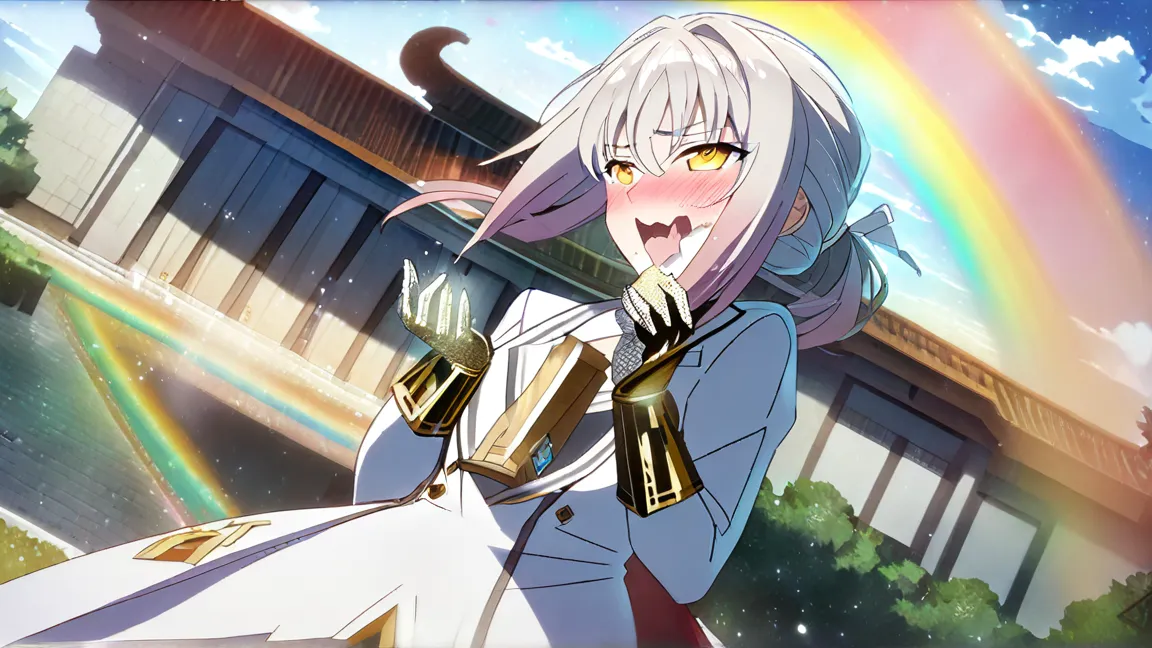
📸 Image Disclaimer: The visual assets featured in this article are AI-generated concept art inspired by the anime's lore, universe, and aesthetics. They are strictly intended for illustrative and editorial purposes and do not represent actual screenshots or official animation assets.